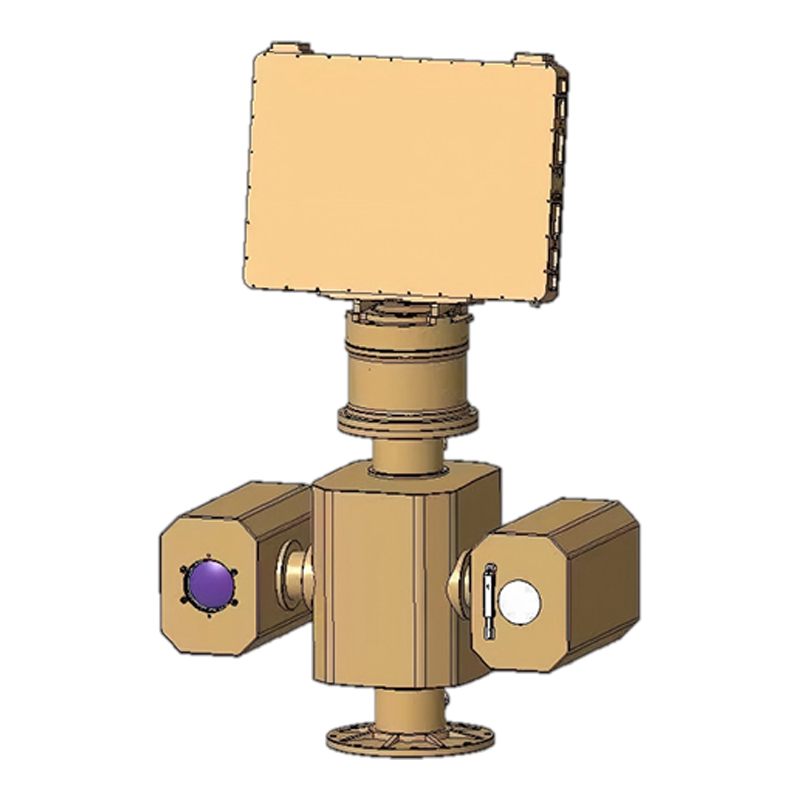

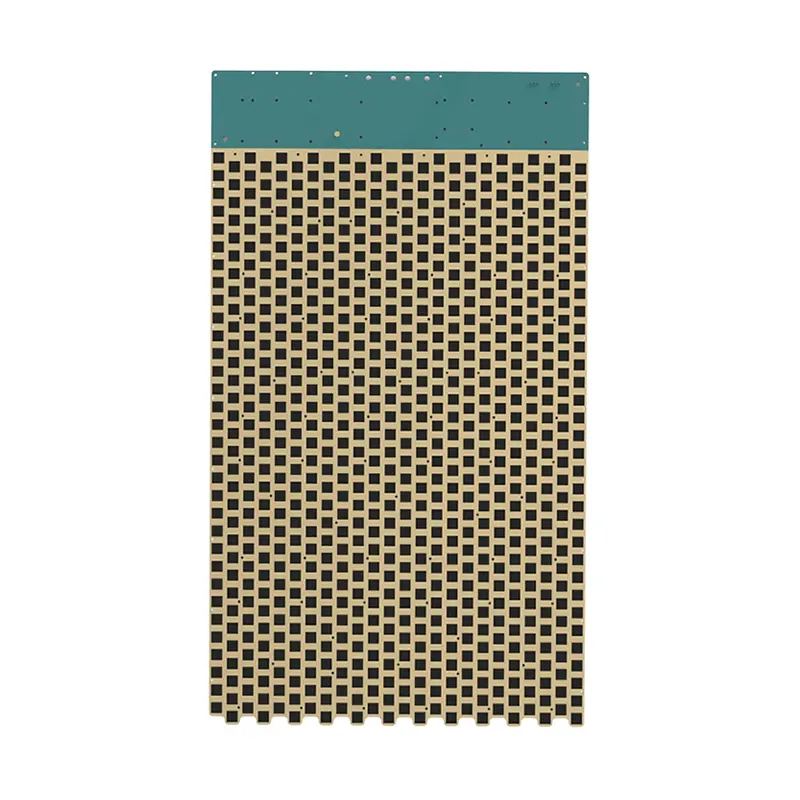
SDL-768 Ku-Band Two-Dimensional Phased Array Receive Antenna Panel
The SDL-768 is an ultra-lightweight 720g Ku-band phased array rx antenna panel integrating 768 elements and advanced SmartFusion technology to deliver stable signal reception from hybrid LEO and GEO satellite networks.
- Ultra-small size, ultra-low power consumption, and high integration
- It supports integrated radome design, does not include up/down conversion, and provides stable reception of both GEO and LEO satellite signals for multi-scenario applications.
e refer to specs document.
Product Details
Product Overview
- Features an exceptionally flat profile measuring 480mm × 276mm × 11.7mm and a net weight of ≤720g, enabling seamless integration into space-constrained mobile or portable housing assemblies.
- Utilizes solid-state electronic beam steering to provide wide-angle tracking coverage across an elevation range of 0° to 70° and a full 360° continuous azimuth adjustment.
- Leverages chip-level Antenna-in-Package (AiP) design and radome integration to optimize spatial layout, excluding up/down conversion circuitry for flexible external system configuration.
- Operates reliably on a standard DC 12V input with an efficient maximum power consumption of ≤90W across an expansive temperature range from -40°C to +70°C.
Key Specifications
| Receiving Operating Frequency | 10.7GHz-12.7GHz |
| Scan Range | Elevation scan: 0°~70°; Azimuth: 0°~360° |
| Number of Elements | 768 |
| Antenna Performance(G/T) | ≥9.5dB/K |
| Polarization Mode | Arbitrary Polarization |
| Linear Cross Polarization Isolation | ≥30dB@0° |
| Power & Control Interface | J30J-21 |
| RF Interface | SMA-K |
| Overall Dimension | 480mm×276mm×11.7mm |
| Input Power Supply | DC12V (11V~13V) |
| Weight | ≤720g |
| Power Consumption | ≤90W |
| Operating Temperature | -40℃~+70℃ |
FAQ
- What does the omission of the up/down converters mean for system integration with the SDL-768?
- By keeping the up/down conversion circuitry external, the SDL-768 achieves an ultra-thin 11.7mm profile and minimizes heat dissipation on the antenna panel itself. This gives system integrators the flexibility to match the panel with their own preferred intermediate frequency (IF) processing blocks or custom modems via the standard SMA-K RF interface, reducing overall development overhead.
- How does the arbitrary polarization capability benefit operators tracking different satellite constellations?
- Different satellite networks—whether traditional Geostationary (GEO) or modern Low-Earth Orbit (LEO) constellations—utilize varying polarization techniques to maximize bandwidth. The SDL-768 features an advanced software-defined tracking layer that supports arbitrary polarization tracking. This means the terminal can adjust its polarization matching dynamically to capture incoming signals cleanly, maintaining a cross-polarization isolation of over 30dB at 0° off-axis alignment.
- What are the exact electrical and data interface requirements for deploying this antenna panel?
- This ku-band satellite receiver component is designed for straightforward electrical interfacing, drawing a maximum of only 90W during peak tracking phases. It runs on a low-voltage DC 12V power input (with a safe tolerance range of 11V to 13V). Power, telemetry, and electronic steering commands are routed through a highly reliable, industry-standard J30J-21 interface connector, ensuring secure data and electrical links even under heavy physical vibration.
Related products
-

Ka-band 1024-Element Transmit Phased Array Subarray Module
Phased-Array Antenna Subarrays -

Ku-band Shared-Aperture Air-Dielectric Thin-Film Phased Array Antenna
Phased-Array Antenna Subarrays -
Ku-band 64-Element Shared-Aperture Subarray Antenna Module
Phased-Array Antenna Subarrays